P11-4 Enamel-Binding Peptides
Think of tooth enamel as the protective outer covering that helps your teeth handle everyday chewing, food acids, and temperature changes. P11-4 is an interesting ingredient because it has been investigated for its potential role in supporting the remineralization of early enamel lesions.
It is a specially designed peptide that can form a tiny scaffold-like structure under suitable conditions. Researchers have explored how this structure may help support the deposition of minerals such as calcium and phosphate.
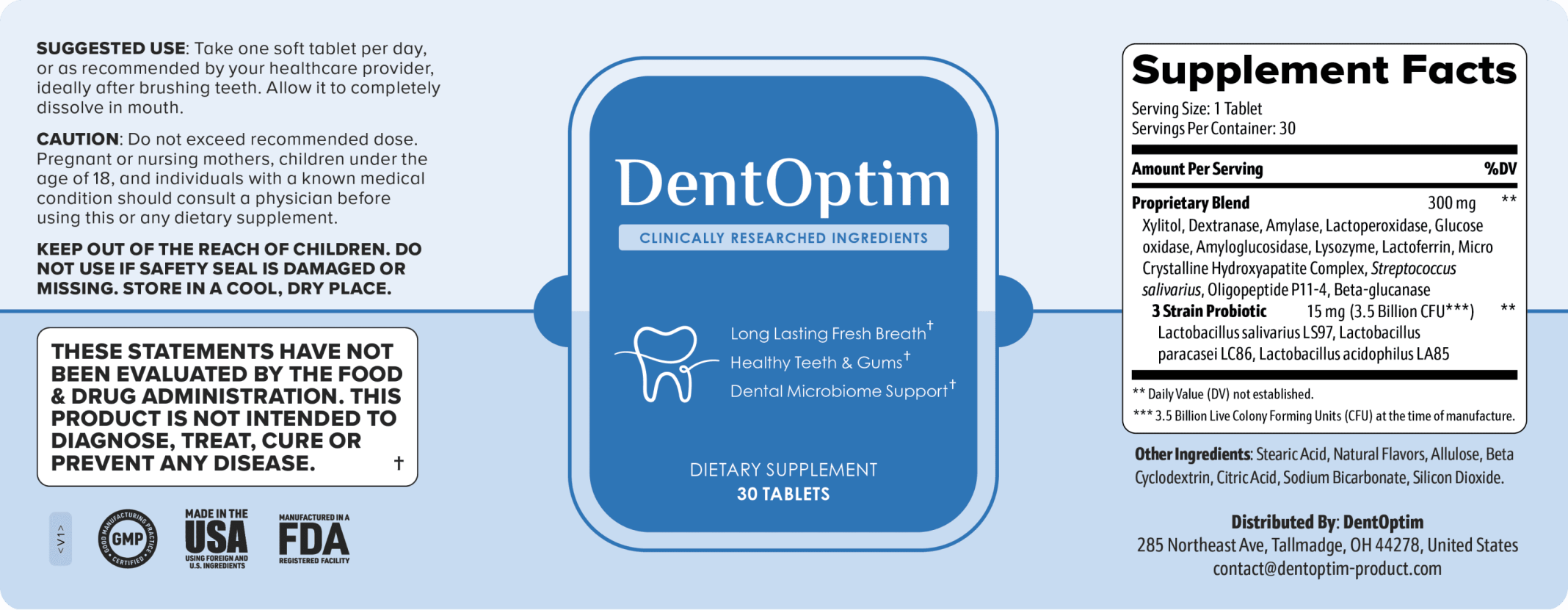
DentOptim includes P11-4 as part of its enamel-focused formula. Its presence makes the ingredient combination interesting for people researching modern approaches to dental wellness. However, studies of specific P11-4 dental treatments do not prove that DentOptim can repair cavities or rebuild damaged enamel.
2. Microcrystalline Hydroxyapatite
Hydroxyapatite is closely connected to the natural mineral composition of your teeth. It is a calcium-phosphate mineral that forms a major part of tooth enamel.
This ingredient has attracted attention in oral-care research because of its relationship with the minerals that give teeth their hardness. Fine hydroxyapatite particles have been studied for their ability to interact with the enamel surface and contribute mineral material.
DentOptim includes microcrystalline hydroxyapatite to complement its peptide-based ingredient. Together, these ingredients give the formula an interesting enamel-care focus. However, results from topical hydroxyapatite products, such as toothpaste, cannot automatically be expected from a chewable supplement.
3. Lactobacillus salivarius
Your mouth contains a community of microorganisms that naturally live on the tongue, teeth, gums, and other oral surfaces. Maintaining a healthy balance within this community is an important part of oral wellness.
Lactobacillus salivarius is a probiotic species that has been studied for its interactions with microorganisms in the oral environment. Certain strains have attracted research interest because of their potential influence on microbial balance.
DentOptim includes this species as one of its probiotic ingredients. Its intended role is to complement the formula's oral microbiome approach. The actual effects depend on the specific strain and quantity used.
4. Lacticaseibacillus paracasei
Another probiotic listed in DentOptim is Lacticaseibacillus paracasei. This bacterial species has been studied in different probiotic applications, including research involving the oral microbiome.
Some strains have been investigated for their interactions with microorganisms associated with plaque and other oral conditions. Researchers are also interested in how selected strains may influence bacterial communities and biofilm formation.
Its inclusion gives DentOptim another probiotic component. However, not every strain produces the same effects, so the exact strain identification and amount are important when evaluating its potential value.
5. Lactobacillus acidophilus
Lactobacillus acidophilus is a familiar probiotic species found in various supplement and food products. It has been widely studied for its interactions with microorganisms in the human body.
In the context of oral health, researchers have investigated how different strains behave around other mouth bacteria. These interactions are complex, and the effects may differ depending on the strain and surrounding conditions.
DentOptim lists this species as part of its probiotic blend. It contributes to the formula's multi-species approach, although its presence alone does not establish a particular dental benefit. Some research has also raised questions about the relationship between certain L. acidophilus strains and dental caries, making strain-specific evidence especially important.
6. Xylitol
Xylitol is a sugar alcohol commonly used in sugar-free chewing gum, mints, and dental-care products. One reason it attracts attention in dentistry is that many cavity-associated bacteria do not use it in the same way they use ordinary sugar.
Researchers have studied xylitol for its possible influence on Streptococcus mutans, a bacterium associated with tooth decay. Chewing xylitol-containing gum can also stimulate saliva production, which naturally helps wash away food particles and neutralize acids in the mouth.
DentOptim includes xylitol as an additional oral-care ingredient. Its potential contribution depends on the amount present and how the finished product is formulated.
7. Dental Enzymes
Enzymes are natural substances that help specific biological reactions take place. Your saliva already contains enzymes and protective proteins that contribute to the mouth's natural defense system.
Certain enzymes, including lysozyme and components of the lactoperoxidase system, have been studied for their roles in oral protection and interactions with microorganisms.
DentOptim lists dental enzymes as part of its formula, adding another ingredient category alongside probiotics and enamel-related components. However, the individual enzymes and their quantities are not specified in the ingredient information available here, so their precise contribution cannot be established.